

One of the biggest concerns buyers have today is this: “What happens if I purchase a home and prices fall afterward?”
Given everything circulating in the media, that hesitation is understandable. Buying a home is a major financial decision, and nobody wants to feel like they’re making a move at the wrong time. But it’s important not to focus too heavily on the handful of markets currently experiencing modest price adjustments.
When you take a broader view of the housing market over time, home values have historically trended upward.
What the Historical Data Tells Us
If you look at long-term housing data from sources like Case-Shiller and Bilello, the pattern becomes pretty clear. Going back to the 1950s, home prices have generally either remained stable or increased year after year, with the major exception being the housing crash during the late 2000s.
Here’s the key takeaway:
Aside from the housing crash, home prices have historically stayed stable or appreciated in almost every year over the past several decades (see visual below).
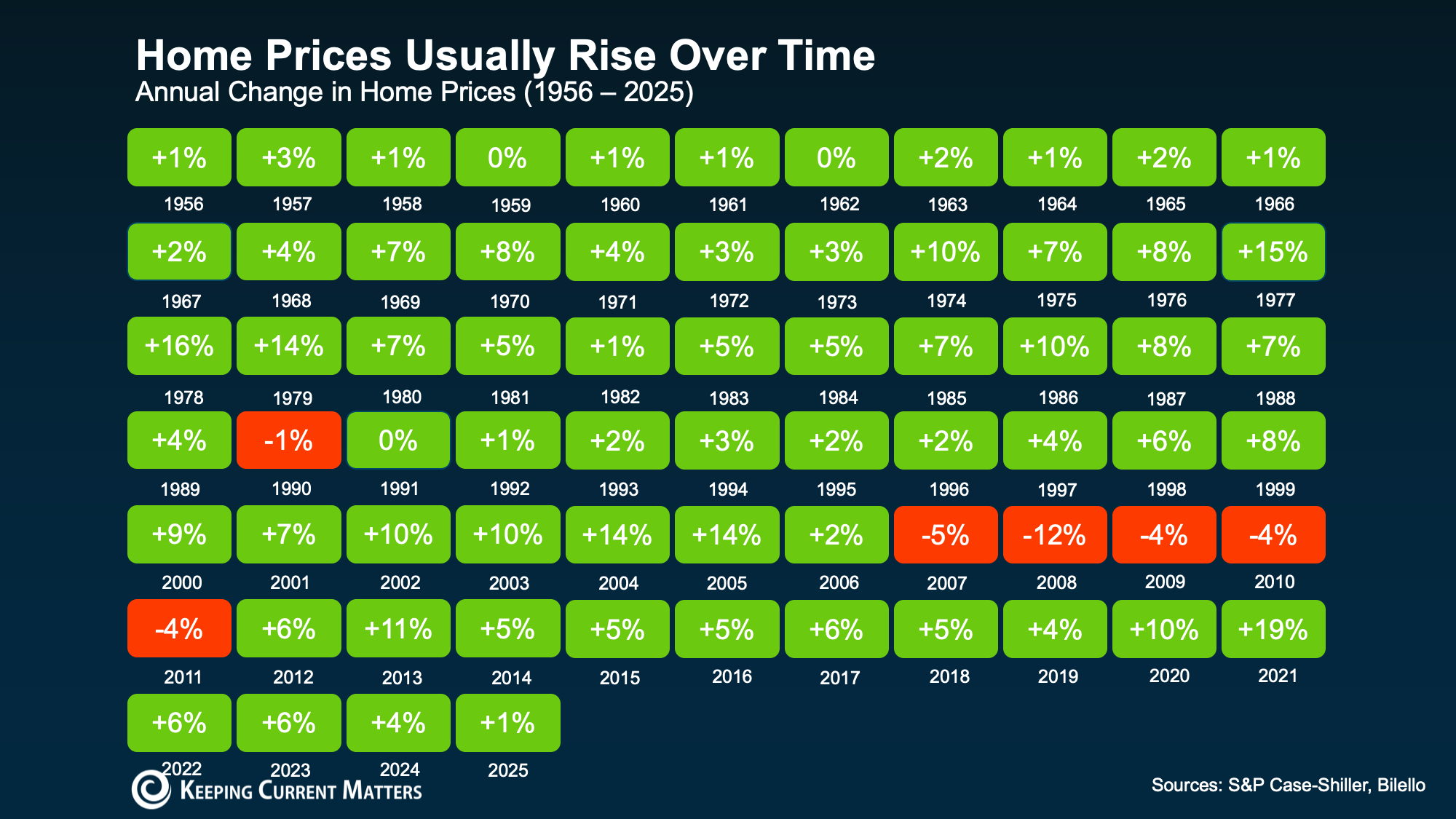
That consistency is significant, and it’s often overlooked in today’s headlines.
While short-term fluctuations are normal, long-term appreciation has historically been the stronger trend.
Why Home Prices Typically Increase
There are several key factors that continue to support home values over time:
- Housing demand never fully disappears. Life changes such as marriage, divorce, growing families, relocations, and retirement continue to create demand for housing in every market cycle.
- Inventory remains limited in many areas. Although the number of homes for sale has improved in some markets, there still isn’t enough supply nationally to fully meet buyer demand. Limited inventory helps support pricing.
- Inflation plays a role. Over time, the cost of goods and services naturally rises, and real estate is no exception. As inflation increases, property values tend to rise as well.
What This Means for Buyers
It’s easy to get caught up worrying about what prices may do over the next few months, especially for first-time buyers navigating a large financial commitment. But historically, real estate has rewarded long-term ownership.
That doesn’t mean every market increases every single year. Real estate is highly local, and some areas may experience temporary slowdowns or price corrections. We’re seeing examples of that today.
Still, history shows those declines are usually short-lived.
That’s one reason experts often recommend purchasing a home only if you plan to stay for several years — commonly at least five. A longer time horizon gives homeowners a better chance to build equity and weather short-term market shifts.
Over time, rising property values can strengthen your net worth and become an important tool for building long-term wealth.
Ultimately, successful homeownership isn’t abo
ut perfectly timing the market. It’s about making a decision that fits your lifestyle and financial goals, then giving your investment time to grow.
Bottom Line
Historically, home values have increased over the long run, which is why real estate is widely viewed as a strong long-term investment.
That doesn’t mean buying right now is the right move for everyone. The timing should make sense for your personal situation and long-term plans.
But for buyers feeling uncertain, history offers an important reminder: real estate has consistently rewarded patience over time. If you’re thinking about buying and want guidance on local market trends, pricing, or timing, connecting with a knowledgeable local agent can help you make a confident decision.